
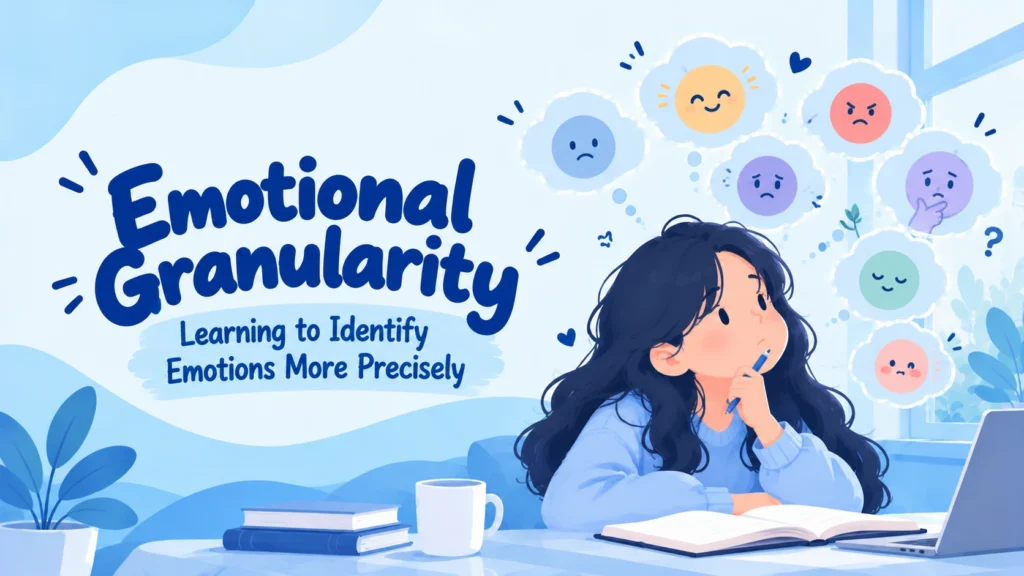
Have you ever said, “I feel bad,” without really knowing what you’re feeling? Maybe you’re disappointed, anxious, frustrated, lonely, or a little of everything at once.
Sometimes, we experience emotions without knowing exactly how to describe them. Learning to recognize these feelings more precisely is called emotional granularity.
What Is Emotional Granularity?
Emotional granularity is the ability to identify and describe emotions with greater detail and accuracy. Instead of labelling every uncomfortable feeling as stress or sadness, you learn to recognise the differences between emotions.
For example, rather than saying, “I’m upset,” you might recognize that you’re feeling disappointed because something didn’t go as planned or embarrassed because you felt judged.
Understanding these differences can help you make sense of what you’re experiencing and choose how to respond.
How Can You Improve Emotional Granularity?
You don’t need to understand every emotion perfectly. You can begin with a few simple practices:
- Pause and check in: Take a moment to notice what you’re feeling instead of immediately reacting.
- Find the right words: Ask yourself whether you’re feeling anxious, overwhelmed, disappointed, guilty, or frustrated.
- Notice what triggered it: Think about what happened before the emotion appeared.
- Pay attention to your body: A racing heart, tense shoulders, or a heavy feeling in your chest may offer clues about your emotional state.
- Write it down: Recording your feelings in a diary can help you recognize emotional patterns over time.
How SereinSoul Can Help
SereinSoul offers tools that can support emotional awareness and reflection. My Diary can help you put feelings into words and notice patterns, while Seri Chat provides a space to explore what you’re experiencing. Self-care activities can also encourage you to pause and check in with yourself.
The goal isn’t to label every feeling perfectly. It’s to understand yourself a little better, one emotion at a time.
A Gentle Reminder
You don’t always have to know exactly what you’re feeling. Sometimes, simply recognizing that something feels different is a good starting point.
“The more clearly you understand your emotions, the easier it may become to understand what you need.”
Give yourself time to notice, name, and understand your feelings without judging them. Emotional awareness is a skill you can develop with practice.