
Have you ever kept yourself busy to avoid thinking about something painful?
Maybe you scroll through your phone, watch another episode, stay occupied with work, or pretend everything is fine because facing your emotions feels difficult.
Sometimes, we try so hard not to feel uncomfortable emotions that we forget to understand what those feelings are telling us. This is known as emotional avoidance.
What Is Emotional Avoidance?
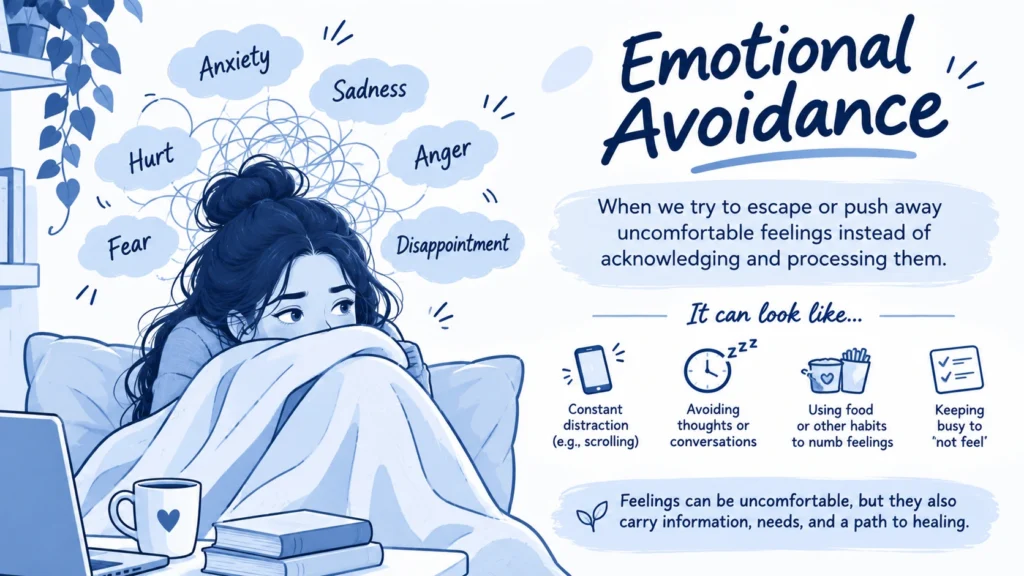
Emotional avoidance happens when we try to escape, suppress, or distract ourselves from uncomfortable emotions instead of acknowledging and processing them.
For example:
- Avoiding conversations because they might bring up hurt feelings.
- Staying constantly busy to avoid loneliness or sadness.
- Pretending to be okay when something is bothering you.
- Ignoring worries rather than understanding what is causing them.
Avoiding emotions may provide temporary relief, but the feelings don’t necessarily disappear. Sometimes, they return later or affect our thoughts, relationships, and daily experiences.
Why Do We Avoid Our Emotions?
Uncomfortable emotions can feel overwhelming. We may worry about being judged, appearing weak, losing control, or having to deal with something we aren’t ready to face.
Sometimes, avoidance becomes a habit. We learn to distract ourselves whenever difficult feelings arise, even when those feelings need attention and understanding.
How Can We Respond Differently?
You don’t have to confront every emotion all at once. Start with small, manageable steps:
- Notice the avoidance: Recognize when you’re distracting yourself from something that is bothering you.
- Name the feeling: Try to identify whether you’re feeling hurt, angry, anxious, disappointed, or lonely.
- Give yourself a moment: Pause and allow the emotion to exist without immediately trying to change it.
- Explore what is behind it: Ask yourself what might have triggered the feeling and what you may need.
- Express yourself safely: Writing, talking to someone you trust, or seeking professional support can help you process difficult emotions.
How SereinSoul Can Help
SereinSoul provides a space to pause, reflect, and understand your emotional experiences. Through Seri Chat, you can explore thoughts and feelings, while My Diary can help you express emotions that may be difficult to put into words. Self-care activities can also encourage you to make time for yourself.
The goal isn’t to eliminate uncomfortable emotions but to develop a healthier relationship with them.
A Gentle Reminder
You don’t have to be comfortable with every emotion you experience. Feeling sad, angry, anxious, or disappointed doesn’t mean something is wrong with you.
“Sometimes, the first step towards feeling better isn’t escaping what you feel but gently allowing yourself to understand it.”
Give yourself permission to feel without judging yourself. You deserve the same patience and understanding you offer to others.