
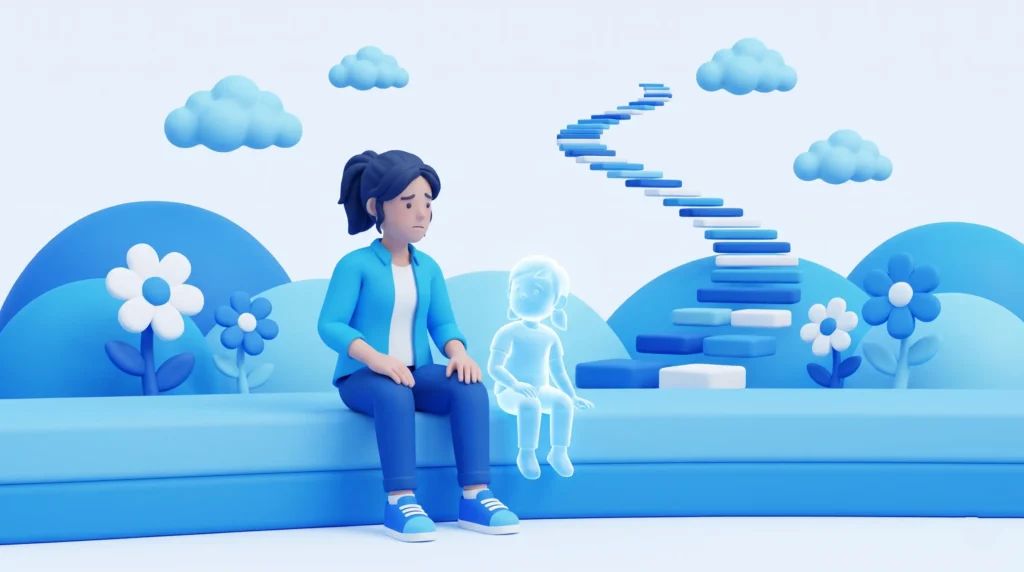
Nobody told me that growing as a person could feel like losing something.
I thought getting healthier, wiser, and more honest with myself would simply feel good.
Instead, I felt sad for the person I used to be, even though she was still doing okay.
It turns out there are simple reasons for this. Once I understood them, I stopped thinking something was wrong with me. Here is what I learned, in plain words.
You are the story you tell about yourself
Think of yourself as a story you have been telling for years. It includes who you are, where you came from, and what you are good at. When the story stays the same, life feels safe and predictable.
Then something changes. Maybe you went through a hard time, started therapy, moved to a new city, or just got older and wiser. Suddenly the old story doesn’t fit. Your mind likes things to stay familiar, so it resists, and that can leave you feeling lost or off balance, even when the change is good.
Many of our old habits began as ways to protect ourselves. Being the quiet one, the funny one, or the person who always says yes helped us feel liked and safe. Outgrowing them doesn’t mean they were fake. They did their job, and now you don’t need them as much.
So when I realized I wasn’t the same anymore, I wasn’t just noticing a change. I was losing a familiar way of knowing myself.
Why growth can feel like grief
We usually think grief is only for when someone dies. But we can grieve other things too: a home, a job, a stage of life, or a version of ourselves.
This kind of loss is hard because nothing clear happens. There is no funeral and no goodbye. The old you just slowly fades away.
It is also hard because other people see your change as good news. They say, “I’m so proud of you!” and nobody asks whether you miss the old you. So you keep the sadness to yourself, and it can come out as a bad mood, feeling numb, or longing for the past.
Here is the important part: feeling happy about growing and sad about leaving something behind can happen at the same time. One feeling doesn’t cancel the other.
When your friendships were built around the old you
Friendships often run on habits. One person is the listener, one is the joker, and one always gives in. When you change, the whole group feels it, and people often pull you back toward your old role without meaning to. That is why I felt a strong urge to act like my old self around people who knew me back then.
There is also an uncomfortable tug-of-war in your mind: I love these people and I don’t feel like myself around them. Both are true, and that clash is where a lot of guilt comes from.
Losing friends can also shake your sense of who you are, because part of how we see ourselves comes from the people we belong to. When a group stops fitting, it can feel like losing a piece of yourself.
It hurts to realize that someone can love you and still not be right for who you are becoming. It can hurt just as much to realize you are the one who drifted, even though nobody did anything wrong. I used to think every friendship that faded was a failure. Now I see that some friendships are chapters, not whole books. They mattered, they shaped me, and they don’t have to last forever to have been real.
It’s normal to feel many things at once
Personal growth rarely brings one clean feeling. Most of us feel a mix, and the feelings can even clash:
- Pride: in how far you have come.
- Guilt: about leaving people or habits behind.
- Loneliness: because you are in between, not fully part of the old life and not yet settled in the new one.
- Relief: that you are finally being honest with yourself.
- Nostalgia: for a time that felt simpler, even if it wasn’t better.
- Fear: that the new you won’t be understood.
I used to pick one feeling and push the rest away, which only made them louder. What helped was simply naming each feeling, out loud or on paper. Putting a clear word on a feeling often makes it feel smaller and easier to handle. That isn’t dwelling on it. It’s understanding it.
What has helped me
I’m not an expert, and I’m still figuring this out. But these simple things have softened the ache:
- Call it grief: Giving the sadness a name stops me from telling myself I’m being silly.
- Be kind to yourself: Talk to yourself the way you would talk to a close friend going through the same thing.
- Write a letter to your old self: Thank her for getting you through hard times. It feels like closing a door gently instead of slamming it.
- Notice what hasn’t changed: Your values, your sense of humor, the things you love. Remembering what is still you makes change feel less like losing everything.
- Be patient with the in-between: There is often a messy middle between the old life and the new one. It’s uncomfortable, but it’s where the new you takes shape.
- Let others change at their own speed: Not everyone will grow the way you do, and that’s okay.
- Make room for new people: The right friends for who you are now exist. It takes time, and it helps to show up as you really are.
If this is you right now
If you are missing an old version of yourself, an old friendship, or a whole chapter of your life, you are not being dramatic or ungrateful. Feeling sad about something good is a normal part of change. It doesn’t mean you are broken.
Be gentle with yourself. Honor who you were, make room for who you are becoming, and remember that you can love your old self without letting her make all your decisions.
“The ache is real, and so is the growth. One day I think you will see that your old self isn’t gone. She has become part of the ground you are standing on.”
If the sadness stays for a long time, gets in the way of your daily life, or makes you feel hopeless, please talk to a counselor or therapist. You don’t have to wait until things feel unbearable to ask for help.