
Have you ever made a small mistake and immediately thought, “I’m a complete failure”? Or received a short reply from someone and assumed, “They must be upset with me”?
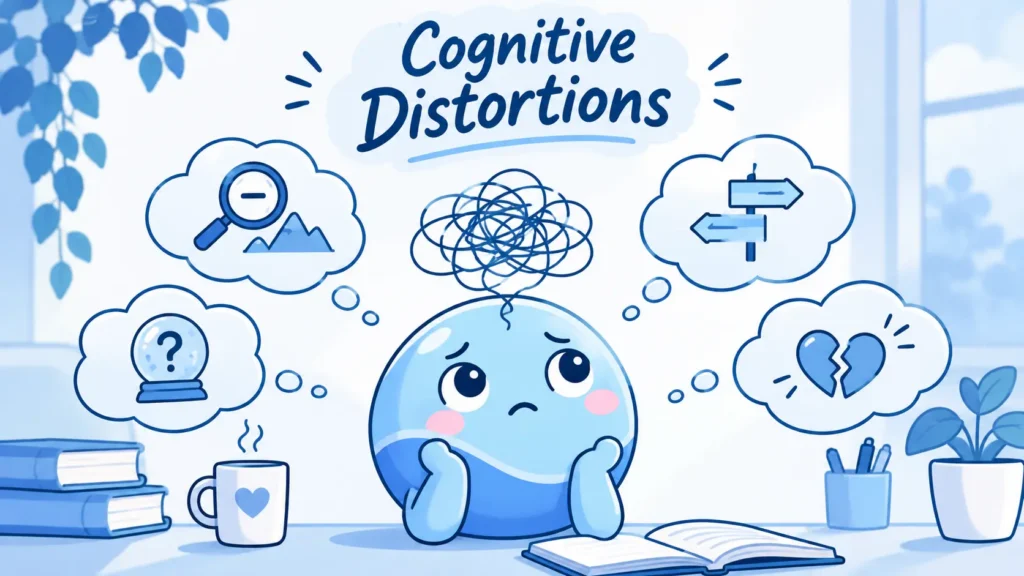
Sometimes, our minds interpret situations in ways that make them seem worse than they actually are. These patterns of thinking are known as cognitive distortions.
What Are Cognitive Distortions?
Cognitive distortions are habitual patterns of thinking that can negatively influence how we interpret ourselves, others, and everyday situations.
They often happen automatically, making negative thoughts feel like facts, even when there may be other explanations.
Some common examples include:
- All-or-Nothing Thinking: Seeing situations as either completely good or completely bad. For example, “If I don’t do this perfectly, I’ve failed.”
- Catastrophising: Expecting the worst possible outcome. “If I make a mistake during the presentation, my career is over.”
- Mind Reading: Assuming you know what others are thinking. “They didn’t reply because they don’t like me.”
- Overgeneralization: Taking one negative experience and applying it to everything. “I failed once, so I’ll never succeed.”
- Personalization: Blaming yourself for things that may not be entirely within your control. “Everyone is unhappy because of me.”
How Can We Challenge These Thinking Patterns?
The goal isn’t to force yourself to think positively all the time. Instead, it’s about learning to look at situations more realistically.
- Notice the thought: Recognize when your mind jumps to a negative conclusion.
- Question the evidence: Ask yourself, “Do I know this is true, or am I making an assumption?”
- Consider other explanations: Try looking at the situation from a different perspective.
- Replace extreme thoughts: Instead of saying, “Everything is ruined,” try, “This didn’t go as planned, but I can work through it.”
- Practice self-compassion: Remember that making mistakes doesn’t define your worth.
How SereinSoul Can Help
SereinSoul offers a space to explore thoughts and develop greater self-awareness. Through Seri Chat, you can reflect on unhelpful thinking patterns, while My Diary can help you identify recurring thoughts and emotional triggers. Self-Care activities can also encourage moments of pause and reflection.
The aim is not to eliminate negative thoughts but to develop a healthier and more balanced relationship with them.
A Gentle Reminder
Not every thought that enters your mind represents reality. Sometimes, the way we interpret a situation can make it feel more difficult than it actually is.
“You don’t have to believe every thought you have. Pause, question it, and give yourself the chance to see things differently.”