
The Situation
Consider someone who decides to make a few positive changes to their daily routine. They want to develop healthier habits, become more organised, and make time for activities that support their wellbeing.
They begin with enthusiasm. They decide to spend fifteen minutes reading every morning, practise a short breathing exercise, and write a few lines in a journal before going to bed.
During the first few days, they follow the routine consistently. Completing these activities gives them a sense of satisfaction, and they feel encouraged by the progress they are making.
However, their usual schedule soon becomes unpredictable. One morning, they wake up late and miss their reading time. On another day, work responsibilities take longer than expected, leaving little time for their planned activities. After a particularly busy evening, they fall asleep without journaling.
At first, they tell themselves that they will continue the next day. But gradually, the routine becomes less consistent.
They begin skipping activities more frequently. Sometimes they remember their plans only after the day has ended. At other times, they feel that they no longer have the motivation they had when they first started.
They start questioning themselves:
- “Why can’t I maintain a simple routine?”
- “I was doing well initially. What changed?”
- “Maybe I’m just not disciplined enough.”
Instead of adjusting their routine to suit their changing schedule, they become disappointed with their inconsistency. They may attempt to restart everything with a more detailed plan, only to find that the same difficulties appear again when daily responsibilities increase.
The difficulty is not necessarily a lack of interest in improving their wellbeing. They genuinely want to develop healthier habits. However, they have not yet found a way to make those habits fit naturally into their everyday life.
Psychological Understanding
This situation can be understood through psychological concepts related to habit formation, behaviour, motivation, and self-regulation.
Habit Formation and Contextual Cues
Habits are behaviours that gradually become more automatic through repetition in relatively consistent situations. For example, someone may become accustomed to reading after their morning tea or writing in a journal before going to bed. These activities can become easier to remember when they are connected to familiar cues in the person’s daily environment.
However, when the surrounding routine changes, the cues that normally support the behaviour may disappear. In this scenario, the person initially follows the activities according to a planned schedule. But when their mornings become unpredictable and their evenings become busy, those activities lose their usual place in the day, making the routine harder to maintain.
The Intention–Behaviour Gap
The intention–behaviour gap describes the difference between wanting to perform an action and actually carrying it out. A person may genuinely intend to read, exercise, journal, or practise relaxation regularly. However, having a strong intention does not automatically ensure consistent behaviour. Daily demands, environmental distractions, changing schedules, and practical difficulties can interfere with those intentions when plans are not sufficiently adapted to everyday life.
Self-Efficacy
Self-efficacy refers to a person’s belief in their ability to carry out a particular behaviour or achieve a specific goal. When someone repeatedly struggles to maintain a routine, they may begin doubting their ability to be consistent. Instead of looking at what made the routine difficult, they may conclude that they are simply not capable of maintaining habits. Recognising small, achievable actions helps create opportunities for progress and builds confidence in managing everyday behaviour.
All-or-Nothing Thinking
Sometimes, people evaluate their routines in two extreme ways: either they are following the plan completely or they have failed. For example, someone who planned to journal every evening may believe that missing two days means they have lost their consistency. In reality, developing a habit does not require perfect performance. Occasional interruptions are part of everyday life, and missing an activity does not erase the effort already invested.
Insights & Approaches
The aim is not to make the person follow a stricter schedule. It is to help them develop a routine that is realistic, flexible, and suitable for their everyday circumstances.
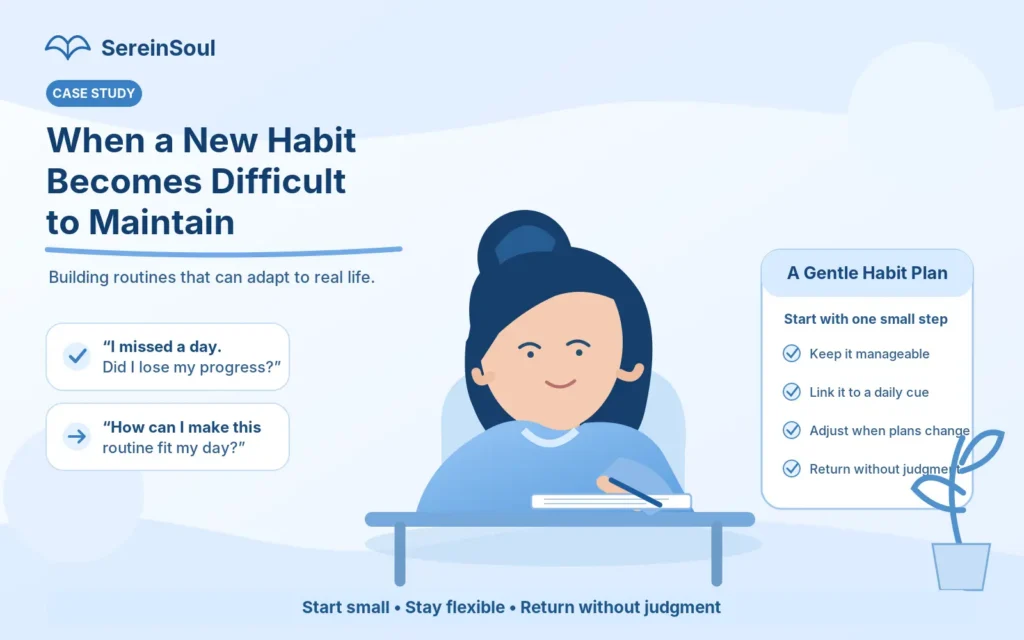
Start With One Manageable Habit: Trying to introduce several new habits simultaneously can make a routine difficult to maintain. Instead, begin with one activity that is meaningful and manageable—such as writing a few sentences rather than immediately planning fifteen minutes of journaling every night.
Connect Habits With Existing Activities: A new habit can be linked to something the person already does regularly, using familiar daily activities as cues:
- Reading for a few minutes after morning tea.
- Taking a short breathing pause after finishing work.
- Writing a brief journal entry after brushing their teeth at night.
Create Flexible Alternatives: A routine should allow some flexibility when circumstances change. If someone cannot complete their usual reading session in the morning, they might read a few pages later in the day. The purpose is not to force the activity into every situation, but to create adaptable options.
Separate an Interruption From Giving Up: Missing one or several planned activities does not mean the entire routine has failed. Rather than waiting for the next Monday or the beginning of a new month, return to the activity whenever it becomes practical.
Focus on Progress Rather Than Perfection: Instead of evaluating a routine only by the number of days completed, notice other forms of progress—such as discovering that evening journaling works better than morning journaling, or identifying times with fewer interruptions.
Use Self-Monitoring Without Self-Judgment: Recording which habits were practised and what interrupted them helps uncover patterns without adding pressure. A brief reflection may include:
- Which activity was easiest to maintain?
- What situations made it difficult to follow my plan?
- Did the timing suit my daily routine?
- What small adjustment could make this activity easier?
Connecting the Process With SereinSoul
SereinSoul’s Personal Wellbeing platform includes Habit Building with Compassion, designed around developing lasting habits without pressure or self-judgment. Its Goals, mood and activity tracking, and Smart, energy-aware calendar can also support a more thoughtful approach to planning and reviewing personal routines.
For example, someone using SereinSoul could identify a small wellbeing goal, reflect on their routine, and notice how their activities fit into their day. The emphasis is not on maintaining a perfect streak—it is on understanding personal patterns and building habits that can realistically fit into everyday life.
Key Learnings
This scenario highlights that wanting to develop a positive habit and maintaining it in everyday life are two different challenges. People may begin with genuine motivation but struggle when their routines change, responsibilities increase, or familiar cues disappear.
Inconsistency does not automatically indicate a lack of discipline or commitment; sometimes, the habit itself needs to be adjusted to suit the person’s circumstances. Building a sustainable routine involves choosing manageable activities, connecting them with familiar cues, allowing flexibility, and recognising progress without expecting perfection.
For SereinSoul, this scenario demonstrates the value of compassionate habit building, realistic goal-setting, and self-monitoring to help individuals develop small, meaningful wellbeing practices that fit their everyday lives.
“A sustainable habit is not one that you follow perfectly every day. It is one that you can gradually make part of your life, even when your routine changes.”