
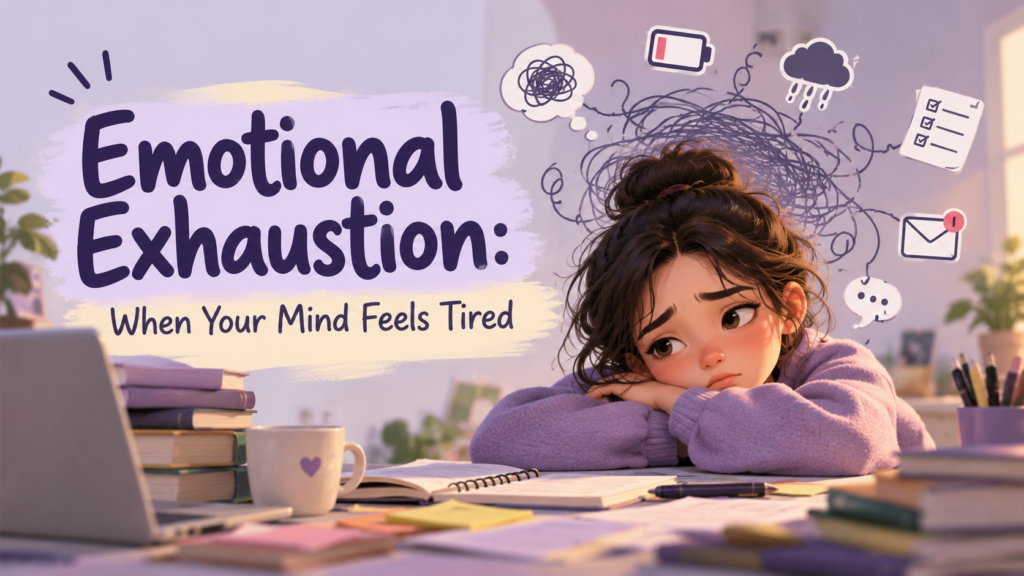
Have you ever felt tired even after getting enough sleep?
Not physically tired—but mentally tired.
You may still be able to get through your day, but everything feels like an effort. Replying to a message feels difficult. Small decisions feel exhausting. You may want to be alone, become easily irritated, or simply feel like you have nothing left to give. This can sometimes be a sign of emotional exhaustion.
What Is Emotional Exhaustion?
Emotional exhaustion happens when ongoing stress, emotional demands, or responsibilities leave you feeling mentally and emotionally drained. It doesn’t always come from one major event.
It can build slowly from:
- Constant work or study pressure
- Relationship difficulties
- Caring for others
- Financial or personal worries
- Lack of rest
- Trying to meet everyone’s expectations
- Keeping difficult emotions to yourself
You may not notice it at first.
You simply start feeling like: “I don’t have the energy for this anymore.”
What Can It Feel Like?
Emotional exhaustion can look different for everyone.
You might notice:
Mentally:
“I can’t concentrate.”
“My mind feels full.”
“Even simple decisions are tiring.”
Emotionally:
“I feel irritated easily.”
“I don’t feel excited about things anymore.”
“I just want to be left alone.”
Physically:
“I feel tired all the time.”
“My body feels heavy.”
“I don’t feel refreshed even after resting.”
These experiences don’t automatically mean someone is experiencing a mental-health disorder.
But they can be signs that something needs attention.
Why Do We Ignore It?
One reason emotional exhaustion can be difficult to recognise is that we often wait until we completely “burn out” before allowing ourselves to slow down.
We tell ourselves:
“I’ll rest after I finish this.”
“Everyone else is managing.”
“I just need to push a little more.”
But constantly pushing through can leave very little space for recovery.
Sometimes, taking care of yourself means recognising that you don’t have to reach your limit before you take a pause.
What Can You Do?
Start small.
Pause
Give yourself a few minutes without another task or distraction.
Notice
Ask yourself: “What has been taking most of my emotional energy lately?”
Reduce
If possible, remove one unnecessary responsibility or give yourself permission to postpone something.
Reconnect
Spend some time with people, activities, or places that help you feel grounded.
Rest
Rest isn’t something you need to earn. Your mind needs recovery too.
A Simple Check-In
Take a moment and ask yourself:
- What am I feeling?
- What is draining me?
- What do I need right now?
You don’t need to have all the answers.
Sometimes, recognising that you’re emotionally tired is the first step towards taking better care of yourself.
How SereinSoul Can Help
SereinSoul provides a space to pause, reflect, and understand what you’re experiencing. Through Seri Chat, My Diary, Self Care, Goals, and Little Me, you can explore your thoughts and emotions and build small habits that support your wellbeing.
My Diary can help you put difficult feelings into words and notice patterns over time. Seri Chat provides a space to talk through what you’re experiencing, while Self Care encourages you to make intentional time for yourself. SereinSoul isn’t about ignoring difficult emotions. It’s about creating space to notice them, understand them, and respond to yourself with greater care.
Remember
You don’t have to wait until you’re completely exhausted to take care of yourself.
Sometimes, “I’m tired” isn’t a sign that you need to try harder.
It may be a sign that you need to pause.
If emotional exhaustion continues for a prolonged period or begins affecting your sleep, work, studies, relationships, or daily functioning, consider speaking with a qualified mental-health professional.