
The Situation
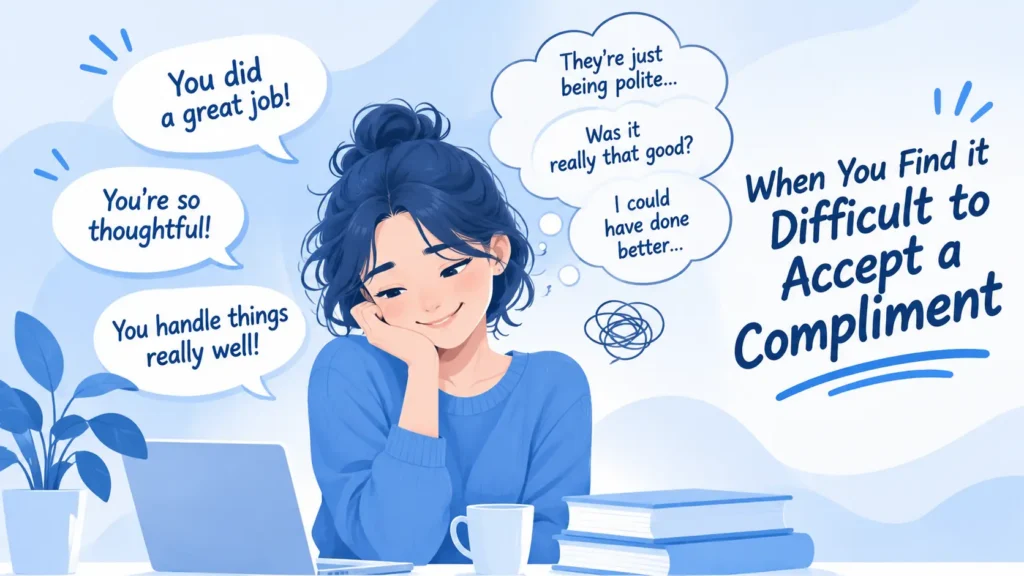
Consider a person who is often appreciated by colleagues, friends, and family members but finds it difficult to accept positive feedback.
At work, they put considerable effort into completing their responsibilities. They meet deadlines, help colleagues, and try to maintain a good standard of work. Occasionally, their manager recognises their contribution and appreciates the quality of their work.
However, instead of feeling pleased, they immediately minimise the achievement. When their manager says, “You handled that task really well,” they respond, “It wasn’t that difficult. Anyone could have done it.”
The same reaction occurs in their personal life. When a friend compliments their appearance, they point out something they dislike. When someone appreciates their kindness, they say they were only doing what anyone would do.
Initially, these responses seem like ordinary modesty. But over time, the person begins to notice that accepting appreciation makes them uncomfortable.
They frequently question whether compliments are genuine. They wonder whether people are simply being polite or trying to make them feel better. Even when positive feedback comes from someone they trust, they struggle to believe it.
Their attention naturally moves towards the things they could have done better. After completing a task successfully, they remember the one small mistake rather than the overall achievement. When someone appreciates their contribution, they focus on what they did not do rather than what they accomplished.
Gradually, this pattern begins to affect how they view themselves. They find it easier to identify their weaknesses than to acknowledge their strengths.
The difficulty is not that they dislike appreciation. They would like to feel comfortable when someone says something positive about them. However, their immediate reaction is often to reject, question, or minimise the compliment.
Psychological Understanding
This situation can be understood through several psychological concepts related to self-perception and thinking patterns.
Discounting the Positive
Discounting the positive is a cognitive distortion in which a person dismisses positive experiences or achievements by explaining them away. For example, when someone receives appreciation for completing a challenging task, they may think, “It was easy,” or “I was just lucky.” Rather than considering the effort involved, they reduce the importance of the achievement. In this scenario, the person repeatedly dismisses compliments instead of allowing positive feedback to become part of their understanding of themselves.
Negative Self-Schema
A self-schema refers to the beliefs and ideas individuals hold about themselves. When someone has developed a negative self-view, they may find it difficult to accept information that does not match their existing beliefs. For instance, a person who believes they are not particularly capable may struggle to describe their work as excellent when praised, questioning the other person’s judgement rather than reconsidering their own belief.
Self-Criticism and Perfectionistic Thinking
People who are highly self-critical may place greater importance on mistakes than achievements. Even when they perform well, they may believe that their work could have been better. As a result, appreciation does not always bring satisfaction because their attention remains focused on what is missing, creating a cycle where positive feedback is dismissed while perceived mistakes receive considerable attention.
Difficulty Recognising Personal Strengths
When individuals become accustomed to identifying their weaknesses, recognising their strengths may feel unfamiliar. They may believe that acknowledging something good about themselves is the same as being arrogant or overconfident. However, recognising personal strengths does not mean believing that one is perfect; it simply means developing a more balanced understanding of personal abilities and qualities.
Insights & Approaches
The central focus in this situation is not to make the person accept every compliment immediately. Instead, the aim is to help them understand their reactions and gradually develop a more balanced view of themselves.
Understanding the Immediate Reaction: The first step is to recognise what happens internally when someone offers appreciation. The person can reflect on questions such as:
- What is the first thought that comes to my mind when someone compliments me?
- Do I immediately disagree or try to explain why the compliment is undeserved?
- What makes it uncomfortable to accept positive feedback?
Learning to Acknowledge Appreciation: A simple practice is to accept a compliment without immediately dismissing it. For example, instead of responding, “It was nothing,” the person can try saying, “Thank you. I appreciate that.” This allows them to acknowledge the positive intention behind the other person’s words without forcing instant belief.
Recognising Evidence of Personal Strengths: The person can maintain a small reflection journal to record positive experiences from everyday life, such as completing a responsibility, supporting someone, or handling a difficult situation calmly. Reviewing these experiences helps notice overlooked qualities.
Developing a Balanced Inner Conversation: When a self-critical thought appears, practice examining whether it reflects the complete situation. Replace automatic dismissals like “Anyone could have done that” with balanced interpretations like “Other people may be capable, but I still put effort into completing it, and that effort deserves recognition.”
Key Learnings
This scenario highlights how a seemingly simple interaction can reflect deeper patterns in the way people understand themselves. Difficulty accepting compliments is not necessarily a sign of arrogance or ingratitude; it is frequently connected to self-critical thinking, negative self-perception, or discomfort with receiving attention.
“Recognising something good about yourself does not mean you believe you are perfect. It means allowing yourself to see the whole picture, including the parts you have learned to overlook.”