
Have you ever planned your entire day the night before, only to find that the plan feels difficult to follow the next morning?
You may have written down everything you need to do. Perhaps you even arranged your tasks according to time, leaving enough room for each activity. But when the day begins, something feels different.
A task that looked simple yesterday suddenly requires more effort. You sit down to concentrate, but your mind feels slow. Later in the day, when you expected to be tired, you find yourself thinking more clearly.
It can be frustrating when your actual energy does not match the schedule you created.
We often plan our days by looking at the clock. We decide when to work, study, exercise, attend meetings, and complete responsibilities. But there is another factor we sometimes overlook: our energy.
The same person may feel focused in the morning on one day and more alert in the afternoon on another. Our ability to concentrate, organise thoughts, and manage activities can vary throughout the day.
Perhaps planning a day should involve more than deciding what needs to happen and when. Perhaps we should also consider how we might feel when it happens.
When a Perfect Schedule Does Not Feel Right
Imagine someone who has an important report to complete. They plan to work on it first thing in the morning because they believe that is the most productive time of their day.
However, when they sit down, they feel mentally distracted. They reread the same paragraph several times and struggle to organise their thoughts. Instead of changing the plan, they become frustrated with themselves.
They think, “I should be able to finish this now. Why am I taking so long?”
Later, after attending to a few routine responsibilities, they begin to feel more alert. Ideas come more easily, and the report becomes easier to work on.
Nothing about their ability has necessarily changed. The timing simply did not match how they were feeling earlier. This is one reason a schedule that looks organised on paper may not always work comfortably in everyday life.
We often expect ourselves to perform consistently from morning until evening. But concentration, motivation, and mental energy are not always constant.
“A plan needs to consider the person following it, not just the tasks written inside it.”
Your Energy Is Not the Same Every Day
Think about how differently your days can feel. On some mornings, you may wake up feeling clear and ready to concentrate. On other mornings, it may take longer to become fully attentive. There may be afternoons when you find it easy to organise responsibilities, and other afternoons when even a familiar task requires more effort.
Several everyday factors can influence how we feel, including:
- Sleep
- Stress
- Physical activity
- Workload
- Food
- Our surroundings
This means our energy does not always follow a predictable pattern. It is also possible to feel mentally ready for one kind of activity but not another. For example, you may not feel like working on a complicated assignment, but you may still be comfortable organising your notes or replying to simple messages.
Recognising these differences can help us understand our own working patterns. The goal is not to divide every hour into productive and unproductive periods. It is to notice what kinds of activities feel manageable at different points in the day.
Not Every Task Requires the Same Kind of Energy
Consider the different things you do in a normal day. Some activities require sustained concentration. Studying a difficult subject, preparing a report, analysing information, or making an important decision may require considerable mental effort.
Other activities are more routine. Organising documents, checking a list, arranging appointments, or responding to straightforward messages may require a different level of attention.
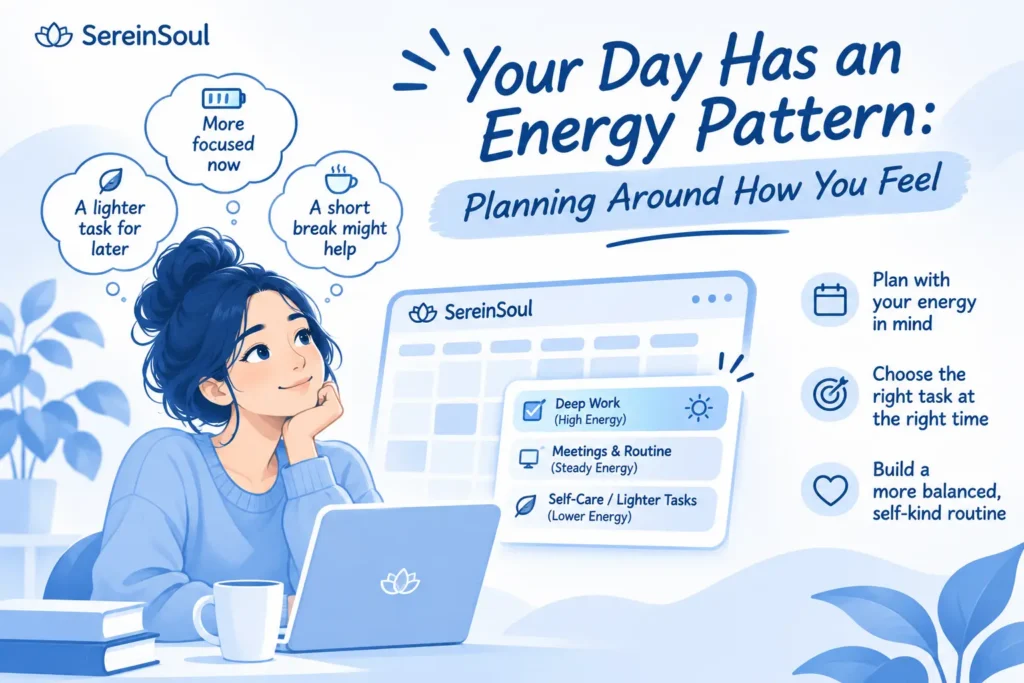
When we plan everything without considering these differences, we may end up placing the most demanding activities at times when we feel least prepared for them. A more flexible approach is to consider the type of energy a task requires. For example:
- When your mind feels clear: You might use that period for activities that require concentration, creative thinking, or careful decisions.
- When your energy feels steady: You could attend to regular responsibilities, meetings, or tasks that need consistent attention.
- When you feel less mentally alert: You might choose simpler activities, organise your next steps, or adjust your workload where possible.
These are not fixed rules. Your energy patterns may change, and different people experience their days differently. The important thing is to observe what works for you rather than expecting every day to follow the same routine.
The Difference Between Managing Time and Understanding Energy
Time management helps us decide how to use the hours available to us. Energy awareness helps us consider what we may be able to do comfortably during those hours. Both are useful, but they answer slightly different questions.
A traditional schedule might say:
“I will study from 9 AM to 11 AM.”
An energy-aware approach adds another question:
“Is this the kind of task I can concentrate on during that period?”
For example, someone may have two hours available in the morning but find that their concentration improves later in the day. Rather than assuming they have failed because the original plan did not work, they can consider adjusting the timing or dividing the task into smaller parts.
This does not mean abandoning schedules whenever we feel different. Responsibilities and deadlines still matter. Some activities cannot be moved easily. But where flexibility is possible, understanding our energy can help us make more realistic plans.
Why We Should Stop Comparing Our Energy With Others
It is easy to notice how other people organise their days. Someone may wake up early, exercise, complete several tasks, and begin work before we have even finished breakfast. Another person may seem most productive late at night.
When we compare our routines, we may begin questioning our own way of functioning:
- “Why can’t I concentrate this early?”
- “Why do I need more time?”
- “Why does my energy disappear in the afternoon?”
But another person’s routine does not necessarily suit our needs. We have different responsibilities, sleep patterns, environments, and daily demands. Even the same person can experience different energy levels across different days.
Instead of treating somebody else’s schedule as a standard, it may be more useful to understand what helps us work comfortably and consistently. Your day does not need to look like someone else’s to be meaningful.
How SereinSoul Connects Planning With Energy Awareness
This idea is reflected in one of SereinSoul’s personal wellbeing features: its Smart, Energy-Aware Calendar.
Instead of looking at the day only through fixed time slots, this feature is designed around the idea of considering energy levels while planning activities. The purpose is to bring attention to how a person feels alongside what they need to accomplish.
SereinSoul also brings together related tools such as habit building, goals, mood and activity tracking, and personalised self-care routines. Together, these features reflect a more flexible approach to everyday wellbeing: understanding personal patterns, organising responsibilities, and building habits without unnecessary pressure or self-judgment.
For example, someone who regularly notices that certain activities feel easier at particular times may begin to organise their schedule with those observations in mind. They may choose to place a concentration-heavy task during a period when they usually feel more alert, while keeping routine activities for another part of the day.
The aim is not to create a perfect schedule or make every hour productive. It is to make planning more considerate of the person behind the calendar.
Start by Observing Your Own Energy Pattern
You do not need to redesign your entire schedule to begin understanding your energy. You can start with a simple observation over a few days. Notice how you feel at different points in the day.
When do you generally feel most focused? When do ordinary tasks require more effort? Are there particular activities that leave you feeling mentally drained?
Try not to judge the answers. There is no universal ideal time to study, work, exercise, or complete responsibilities. You are simply collecting information about your own experience. Over time, you may notice patterns that help you make more thoughtful choices about your routine.
Remember that the goal is flexibility, not strict control. If an unexpected responsibility changes your plans, you can adjust them. If your energy is different from what you expected, you can reconsider the order of your activities.
A useful plan should support your day, not become another source of pressure.
A Small Check-In: What Does Your Energy Look Like?
Take a moment to think about a typical day. Consider these questions:
- At what time of day do I usually feel most mentally alert?
- Which activities require the most concentration from me?
- Are there certain periods when I find it harder to stay focused?
- Do I plan my day only around available time, or do I also consider how I feel?
- What is one small adjustment that could make my daily routine more realistic?
You might also try recording your energy at three points tomorrow: morning, afternoon, and evening. Write down how you feel and what you are doing at those times. After a few days, look for patterns rather than expecting every day to be identical.
You do not have to make every hour count in the same way. Some periods may be better for concentration, others for routine responsibilities, and others for slowing down. Understanding these differences can help you build a routine that feels more supportive and realistic.
“Your calendar can tell you what time it is. Understanding your energy can help you decide what to do with that time.”
Take your time. There is no right or wrong answer.